2026 SHORTLISTED PARTICIPANTS
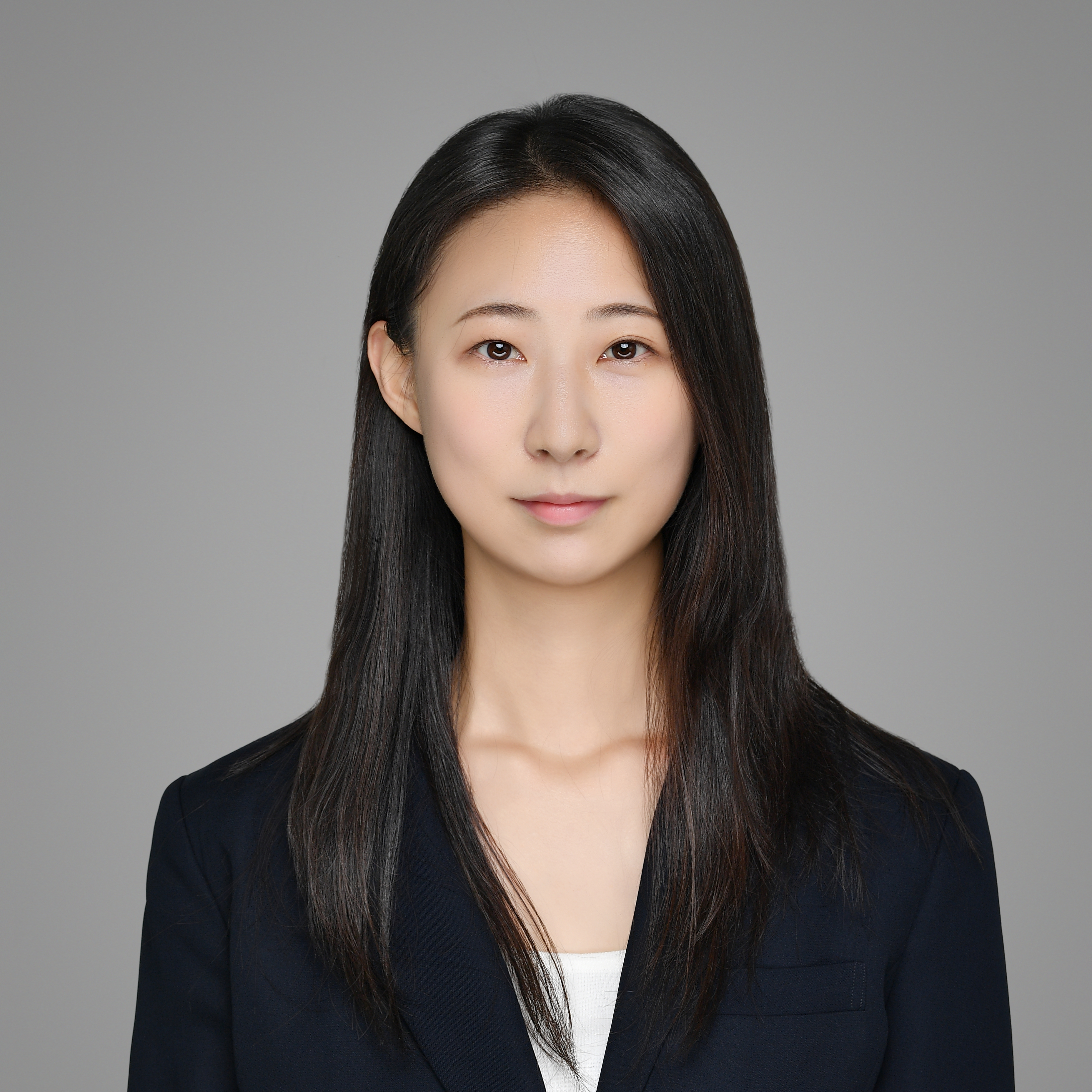
Dr. Jiwon KIM
Hibbitt Postdoctoral Fellow in Engineering
Brown University
Research Vision: Build, Predict, and Control
As a mechanical engineer, I investigate the dynamic, force-mediated reciprocity between cells and their microenvironments. My research converges biomaterials, microphysiological systems (MPS), and quantitative imaging to establish a new therapeutic paradigm, “Mechanomedicine”. My future laboratory will operate under the motto "Build, Predict, and Control":
- Build advanced in vitro disease models that recapitulate the complex mechanical landscapes of human tissue.
- Predict pathological cell behaviors through integrated computational modeling and quantitative data.
- Control biological outcomes by leveraging physical cues to enhance beneficial processes (e.g., immune infiltration) while suppressing harmful ones (e.g., tumor invasion).
Key Contributions
- Symmetry Breaking and Remote Control of Collective Cell Invasion (Nature Physics, 2026)
I discovered that the initial geometry of multicellular spheroids dictates the site of invasion, as cellular traction forces locally accumulate near regions of high curvature. This localized force induces radial alignment of matrix fibrils, which act as a “highway” for cell migration, leading to spatially selective invasion from these regions. I further showed that collective invasion can be paused or even reversed by transiently applying osmotic pressure, revealing an unprecedented mechanism of “remote control” via a purely physical trigger. This work provided new insight into how spherical cell collectives break morphological symmetry and initiate further tissue morphogenesis. - Discovery of ‘collective mechanical memory’ via supracellular physical network (ACS Applied Materials and Interfaces, 2025)
I developed in vitro models of ovarian cancer metastasis that incorporate key physical features of anatomical microenvironments. Inspired by the broad heterogeneity in stiffness of early-stage ovarian tumors, I cultured ovarian cancer cells in biomaterials of different stiffnesses and found that cells retained a “memory” of their previous mechanical environment even after being transferred to the same final condition. The mechanical memory was transmitted across generations through supracellular cytoskeletal networks, rather than being explained solely by gene expression or epigenetic regulation. I further showed that this collective mechanical memory depends on intercellular communication through gap junctions. Moving forward, I aim to continue investigating biological phenomena that cannot be fully explained by conventional biochemical approaches, using mechanical and quantitative perspectives to better understand cell and tissue behaviors. - Developing platforms to maintain, observe, and control multiscale biological systems (Lab on a Chip, 2022)
I engineered microphysiological platforms to maintain and observe biological systems under various constraints. By developing a microfluidic "capture" system for buoyant adipocytes, I achieved the first-ever high-resolution recording of 'liposecretion' (lipid droplet secretion).
Ongoing projects
- Semiconductor-based Platforms: Developing capacitance-sensing arrays for label-free, real-time monitoring of microtissues and pixel-level electrical stimulation to guide cell patterning.
- AI-Assisted Analysis: Utilizing machine learning to quantify immune-cell phenotypes and collective dynamics within complex extracellular matrices.
By synthesizing microphysiological systems, semiconductor technology, and AI, I aim to develop robust engineering strategies to decode and manipulate the physical language of biological systems.

